Monday, November 29, 2010

Camping in Style

Educating our children on the remaining treasures of the Earth is essential to planning a greener, more environmentally conservative future. Today most consumer products come with a “green,” “recycled,” or “eco-friendly” option, and travel has been no exception! As the global population approaches the 7 billion mark, it is important to consider how we can access world heritage sites without detrimentally depleting local resources or harming vital ecosystems, and how to coach our kids on responsible tourism.

So how exactly does the luxury traveler consider a low-impact family adventure without giving up the five-star atmosphere? While several options exist, deluxe camping is not only a highly self-sustaining practice, but also provides an intimate, educational family experience that is simply unachievable within conventional luxury settings.

Consider these examples:

- After a day of learning about the Mala Man and watching the sun set on the Kantju Gorge, return to your intimate 15-tent camp to a gourmet, 3-course dinner under a blanket of stars. Retire to a canvas-roof, air conditioned deluxe accommodation atop a red sand dune facing Uluru. Longitude 131 in Central Australia was constructed with preserving the local environment in mind. Completely sustained by solar power, Logitude 131 offers an intimate, luxurious experience within an expansive living cultural landscape, as well as an education on the unique history of the Outback.


- Depart from the traditional park reserves and join the Maasai Mara in the Chyulu Hills of southern Kenya (the Green Hills of Africa of Ernest Hemmingway) at Campi ya Kanzi. Campi ya Kanzi, meaning “Camp of Hidden Treasure,” is dedicated to sharing an authentic experience of an iconic Africa, rich in wildlife, wilderness, and culture without subjecting its patrons to the hustle and bustle of busier commercial cities and properties. After a quiet night’s sleep in your luxurious thatched roof, tented room, complete with feather bed, begin your day with tea on your private veranda overlooking Mt. Kilimanjaro. Options for the day include National Park excursions, Maasai cultural villages visits with your own personal Maasai tracker, Cloud Forest walks, bird watching, and more. All accommodations have been constructed from local materials (without a single tree cut!) and provide both electricity and hot water via state-of-the-art solar power system.


- Follow in the footsteps of the Patagonian natives, the Kawesqar, who built their geodesic huts along the dismembered coast. Ecocamp Patagonia hosts an intimate, luxurious group of geodesic huts (a cross between an igloo and a dome) amidst the magical flora and fauna of the Torres del Paine National Park, Chile. Each day at Ecocamp offers the opportunity to follow the Kawesqar’s example of communing with “mother nature:” horseback riding within the virgin beech forests, observing Chilean condors from the southern face of Paine Massif, or kayak expeditions to the colossal calving glaciers. Each night, return to the organic wood-and-leather comforts of your dome, warmed by a low-emission wood stove. Hot showers and electricity are provided via solar and wind energy.


While camping – even luxurious camping – may not be every family’s cup of tea, try to consider destinations that utilize energy-efficient power and water supplies, and contribute to the native community. Several deluxe properties take advantage of the growing “green” trend with renewable building materials, low carbon emissions, and energy efficient appliances. Look for buildings with LEED certifications – they are the leaders in environmentally sensitive construction.

Monday, November 15, 2010

Thailand, Laos, & Burma – Eastern & Oriental Express + Road to Mandalay – February 20 – March 4, 2010

I had the great fortune to recently join Cindy Holloway on the Eastern & Oriental Express on its first journey into Laos and then on the Road To Mandalay from Yangon to Mandalay, both of which were extraordinary experiences.

First we stayed at The Sukhothai, a serene alternative to the hustle and bustle of the Mandarin Peninsula. The rooms are very large and have wonderful bathrooms with a contemporary, very luxurious ambience. The pool, spa, and restaurant were great, and the service was excellent.

Next was The Mandarin Oriental, the Grande dame of Bangkok hotels. It has a very traditional décor and old world atmosphere. The lobby is a constant buzz of activity and star sightings… the Crown Princess of Thailand was coming in as we checked in! The service is impeccable – there is butler service on all floors – and there are many restaurant choices: Chinese, Thai, French, Seafood, Italian, riverside, etc…

Directly across the river from the Mandarin Oriental is the Peninsula, a very contemporary and luxurious option for those who prefer high tech to charm. They have a large spa, several small swimming pools that are tucked in alongside the hotel, and several restaurants. They also have a complimentary water shuttle.

While in Bangkok, I spent two days touring with a guide and driver arranged through Trails of Indochina. The guide, Lee, was flexible and very personable.

We boarded the Eastern & Oriental Express in Bangkok for its inaugural journey into Laos. The train is beautifully appointed. There are two suites that are slightly larger than the staterooms, with bigger bathrooms, inclusive mini-bar, and their own sound system. Staterooms are extremely comfortable with a day bed, two chairs, table, and small but efficient bathroom. Both the suites and the staterooms are made up with two twin beds while you are at dinner. Breakfast is served in your cabin, and the cabin coverts back when you get off the train to tour in the morning.

Our first afternoon and evening were spent traveling Northeast through Thailand. We were treated to a conversation with fellow guest William Warren, author of many books including “The Unsolved Mystery of Jim Thompson.” There was also a palm reader on board, as well as a fruit lecture/tasting. Lots of fun!

On our first full day, we visited ruins of Phimai, a world heritage site on the old route to Angkor, and the largest complex of Khmer ruins in Thailand. After lunch on board, we visited a lovely family run wintery, Granmonte, in the Asoke Valley. The Thai wine industry is young but promising.

The next morning we made the historic crossing of the friendship bridge spanning the Mekong River into Laos. We disembarked in Vientiane, where we spent a full day touring That Luang, Patuxai Victory Gate, a Lao Textile museum, and Wat Si Saket with lunch at the colonial style Settha Palace Hotel.

Half of the passengers stayed in Laos, likely travelling north. We returned through the night to Bangkok. From Bangkok we flew to Rangoon/Yangon, the (former) capital of Burma/Myanmar. We spent our first night at the beautiful Governor’s Residence hotel, an exceptional Orient Express property in the embassy district of the city. The hotel appears colonial, but is a new property. The rooms are spacious, there is a beautiful garden where meals can be taken, an inviting swimming pool and wonderful upstairs porch perfect for reading, napping, or playing a little pool. You could easily spend a week at this hotel alone. Franz, the hotel and boat manager, is an interesting fellow who enriched our stay with wonderful stories and introductions to local expatriates.

Our next day we flew from Yangon to Bagon on a small prop plane. A little scary on the aircraft, but the flight is wonderful as you fly north and see hundreds of temples and pagodas from the air. We were greeted by our exceptional guide, San, and drove to the riverbank where the Road to Mandalay was docked. The Irrawady River was exceptionally low for this time of year, which made our journey logistically challenging. We had to take small fishing boats from the river bank out to the boat, adding to the charm.

The Road to Mandaly was damaged 18 months ago in a cyclone that practically snapped her in two, but the rebuild/renovation is spectacular. The cabins were reduced to 43, and are spacious and extremely comfortable. The boat has a small spa, gift shop, spacious dining room, piano bar, lounge, and upper deck with pool, ample seating, and where lunch is served.

The guides are employed by the boat and travel with you – and are excellent!

We spent our first afternoon exploring the temples and local villages of Bagan, enjoying the magnificent sunset from the top of one of the 3000+ temples in the 36 square kilometer area around Bagan. The next morning we started early, enjoying more walking through Bagan and local villages. This is also a great place to do a balloon ride to appreciate the scope of the landscape covered in Buddhist temples, pagodas and stuppas. By mid-morning we were sailing towards Sagaing, which is 30 kilometers south of Mandalay. This is as far as the river would allow us to go, but normally you would sail into Manadaly, which is a magnificent sight with gleaming gold pagodas covering the hillsides. We visited Sagaing and Mandalay by road.

Burma is a mysterious country, closed to the world for so many years, and still oppressed by an unnoticeable, but intimidating military dictatorship. The people are happy, well fed, and placated by Buddhism.

Saturday, March 20, 2010

La Samanna - St. Martin - March 2009


What could be better than a chance to practice French, get a tan and enjoy wonderful Caribbean hospitality?

After her first real winter in Connecticut, Madison requested sunshine and a chance to try out her newly acquired French. With our best friends Syd and Chloe, we headed to La Samanna in St. Martin for a week of just that.

La Samanna is set on a beautiful stretch of white sand beach and perfectly blue Caribbean waters. We were lucky enough to try out their brand new villas, set on the cliff overlooking the property. With four bedrooms, a grand living room, dining room, kitchen and swimming pool, it was the perfect place for a house party. We spent our days enjoying the beach and the water (including a snorkel trip) and our evenings exploring the lively island.


The warmth of the people and the sun were just the perfect way to start spring.

Sunday, March 14, 2010

Paris & Provence – without the crowds


What better way to celebrate the holidays with family than a few days in Paris and a villa rental in Provence?


We rented a lovely apartment in the Marais and spent a few days in the city of lights visiting museums, skating at the Hotel de la Ville, and taking tours with our good friend and favorite guide – Antoinette.

On Christmas Eve we took the TGV to Avignon and drove to our home for the next week – a beautiful five-bedroom villa in the village of beaumes-de-Venise.


We spent our days exploring Provence – colorful and festive and free of any tourists. We toured the Luberon, Les Beaux, Vaisonla Romain, Avignon and St.Remy. We shopped local markets and cooked in the beautifully well-equipped kitchen, replete with La Cornue stove. We explored Christmas markets and local churches displaying their nativity scenes. We skated on outdoor rinks and sampled lots of hot chocolate.


Our favorite outing was to the truffle market in Templiers where we saw truffles being purchase by locals and restauranteurs, and indulged in all things made with

truffles. We were even invited to a school gym for a fund-raising truffle breakfast!


Our home came with a lovely host that served as our concierge, tour guide and connection to the local festivities.

If you’re looking for a charming escape from holiday madness and would like to experience Provence as an insider, I highly recommend Christmas in Provence!


Greek Odyssey - August 2008


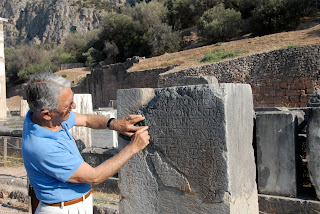
Our Greek Odyssey started with a week on the Peloponnese Peninsula where we explored Delphi, Olympia, Mycenae, Nafplion and Athens with our wonderful guide Antony.


He brought the Greek Mythology and ancient history alive for us through his stories and tours and we thoroughly enjoyed the living history lesson.


Next we set sail for the Aegean aboard the three-masted sailboat Panorama. She holds 40-45
passengers and this trip, arranget along well. For a week we sailed the Greek Isles, stopping at Sifnos, Santorini, Kos, Patmos, Naxos, Syros. The Aegean is in control and several days we were blown off course and ended up at different islands than anticipated. Flexibility is key when sailing these isles, and having a small boat makes that easy because you can dock or anchor anywhere.


Mornings were generally spent exploring the islands and sampling local fare, and afternoons spent enjoying the wine dark Aegean – swimming, Kayaking or a crowd favorite, diving off the boat.


The kids dressed as Greek Gods and served us dinner, performed a Greek Tragedy, painted pottery and learned some folk dances. They embraced the culture and made enduring friendships.


As we sailed back into Pireus our well-travelled teens declared this to be the perfect combination of History, Culture, Sun and Fun!


Saturday, March 13, 2010

Small Yacht Cruising in Alaska - July 2008


I experienced a wonderful adventure with American Safari Cruises, on board the 12 passenger Safari Escape. We traveled Alaska's inside passage from Prince Rupert to Juneau over 9 days. It's a little more challenging to get to/from than the usual Vancouver or Seattle jumping off points, but it means getting to the good stuff sooner and only sailing during the day.


The Escape is a small ship with one "master cabin," one "junior suite" and four very cozy but comfortable cabins (two doubles, two twins). It's close quarters, but very comfortable. Perfect for a family to charter.

We had an outstanding crew of six (yes, for 12 passengers) that work very hard and are very knowledgeable about the region. Our captain and first mate spent many years with Lindblad, and our trip leader was a wealth of knowledge.

The small ship allows for a lot of flexibility in the schedule, taking time to stop when you find wildlife, getting into the zodiac and kayaks on a moments notice, and deciding to spend the night in an interesting cove. We spent a lot of time kayaking, hiking and exploring by zodiac. The ship always anchors at night, and they are very accommodating of guests interests and requests.


Shore excursions were basically tours with interesting locals. For the most part, we avoided the big ships and their destinations, instead focusing on wildlife and small villages.


The food on board was incredible. Always a meat, fish and vegetarian option, three meals a day cooked to order. Freshly baked muffins every morning that you could small all over the boat, and cookies in the afternoon that they would deliver to you while kayaking!


The beauty of seeing Alaska on the Safari Escape is that we could explore places on a whim and stay longer if we were enthralled with a place. One evening we were kayaking in a cove and found a pod of whales had joined us. We over-nighted there, throwing out a crab pot, and enjoyed the cove the next day as well (while feasting on fresh crab) and did not have to hurry on to our next destination.


Thursday, September 18, 2008

Turkey


In February I was the guest of a colleague who runs the best travel company in Turkey. For 10 days were escorted around the country by a wonderful guide named Atilla. He taught us so much about the history and culture of this mysterious country that straddles the European and Asian continent.

Our journey started in Istanbul, a rich and exotic city that deserves a long stay. We visited the immense Church of St. Sophia, the serene Blue Mosque, named for the colorful blue Iznik tiles that adorn the interior as well as some lesser-know and even more beautiful mosques. We explored the world of the Sultans at Topkapi Palace and learned some of the colorful stories of the infamous harem. We descended underground into the Basillica Cistern, a stunning underground reservoir constructe in 532 AD. Istanbul is full of little jems of churches, such as the Church of St. Savior in Chora, containing stunning mosaics and frescoes, and small museums like the Turkish and Islamic Art museum containing world-class collections. We also enjoyed experiencing the more residential “Asian Side” of the Bosphorus, where most of the residents of Istanbul live. We stayed at a variety of hotels, including the beautiful Ciragan Palace on the Bosphorus and the centrally located Four Seasons built in a former prison. These are the best two hotels in Istanbul, along with a new Four Seasons on the Bosphorus. There are also some unique little hotels in the heart of the city for those who prefer a more local feel.

We soaked up the Grand Bazaar and Spice Bazaar, and with the aid of our friend and personal shopper, Colette, managed to haggle for some beautiful rugs, pottery, linens, jewelry and other treasures. The Turks enjoy bargaining, inviting you into their shops for tea and conversation.


Then we headed south to Izmir and visited one of the seven wonders of the ancient world – Ephesus. Famous for its Temple of Artemis, but with so much to see – The impressive Hadrian Temple, the newly excavated Terrace Houses, the Celsus Library and Great Theatre – Ephesus is one of the best preserved examples of Greek architecture. After visiting the museum containing many of the artifacts found at the site, we visited the House of Virgin Mary, where the Virgin is said to have lived the last years of her life.


From Bodrum we flew to Kayseri in central Turkey and explored the region of Cappadocia. We stayed at the Anatolian Houses, carved into the unique conical rock outcrops that cover the landscape – yes, you sleep in caves! The best way to view these “fairy chimneys” that look straight out of a Dr. Seuss book is by hot air balloon. We went on an early morning flight – when the air conditions are best – which was breathtaking. After breakfast we explored the Goreme Open Air Museum – where 365 churches and chapels are carved into the rocks. Early Christians escaping persecution constructed these churches and lived here in a monastic style. Some are still richly decorated with frescoes, especially those in the Dark Church.

From Goreme we drove through the spectacular Pasabag Valley to Kaymakli, where we descended into an underground city carved five levels below ground. These complexes were carved by Early Christians to avoid invaders.

Another unique experience was the opportunity to observe Whirling Dervishes perform the Sema Ritual at a restored caravanserai, an ancient inn built along the silk road. This was not a performance; there was no introduction, explanation or applause. We were merely observing this spiritual ritual which has always been a mystery to me.

The Anatolian region is famous for it’s ceramics, and we visited a local workshop in the town of Avenos where the red soil is perfect for making the clay and generations of painters create masterpieces. There is a great deal of Greek influence still in this region, and in the picturesque village of Mustafapasa, a perfectly preserved Greek village, we had lunch in a local home.


The food throughout the country was fantastic. Each meal was an event – a parade of soups, salads, meat and fish. Lots of small courses, each distinct and delicious, finishing with a strong Turkish coffee and hopefully some to read your future in the grounds. Some of my favorite discoveries were borek (flakey cheese filled pastry), manti (tiny lamb filled dumplings), Testi Kebab (lamb cooked in a clay pot which is broken open at the table) and the endless preparations of eggplant.

The Turks are delightful people, eager to share their culture and welcoming hosts. A trip to Turkey is a perfect combination of an exciting city, unique country side, rich culture and beautiful coastline for relaxation. And they have yet to adopt the Euro, so it’s much better value than Euro-based economies.